
Cash sweeping rather than settlement

broom-sweeping-money-cash-into-dust-pan

Through history and the way that card payments have been designed, the action of clearing a payment and settling the payment became inextricably intertwined: one could just not clear a payment without also settling it. It was the only way to implement a multi-party payment model with limited resources in days gone by. When a customer from a different bank to the one that the merchant banks at pays, the merchant needs to know that that specific payment will ultimately end up in the right bank account.

The process of moving money from one bank to another, effectively for every payment made, is called settlement and through the decades it evolved to become one of the most complex systems in the payment world. It also contributes significantly to the cost of a payment. In order to be able to verify that every payment has been settled (individually), a complex structure of processes, reconciliation and managing exceptions was developed and is now in operation.

But what if we can decouple the settlement of a payment from the payment itself?

In this scenario, the money that a merchant makes from payments, will accumulate at the bank of the customer that purchased goods at the merchant. After a while, the merchant may have quite a tidy sum at another bank (or probably other banks), that represents the sum of all the payments received from clients from that bank. If it is a high volume business, the amount could be made up of thousands or even hundreds of thousands of transaction that were conducted in a short time.

If the merchant had the right tools, this money could then be transferred to the bank of choice of the merchant. The intervals of transferring the money, the logic and the amounts can be adjusted to support the needs of the merchant and can be totally decoupled from the actual payments. This would be called sweeping cash from one bank to another and would eliminate the need for settlement completely.

In a next post, I will discuss the merits of such a system and why it would make sense to consider deploying something like this.
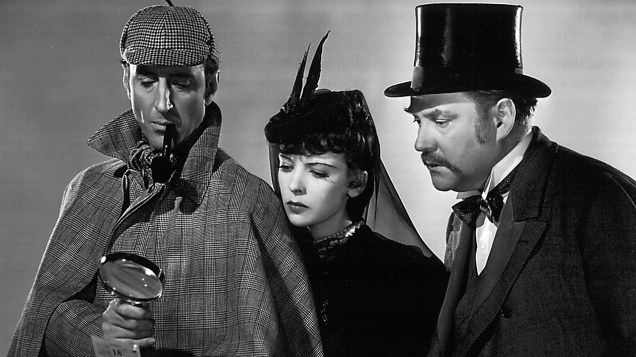

Elementary Mr Watson

adventures-of-sherlock-holmes-1939

It is interesting how technology-activity and -investment is influenced by hype. If enough people are talking about something (especially when some announce that this phenomena is the biggest invention in human history since the invention of the wheel: read block-chain), then it must surely be important. Life in technology is the ebb and flow between one hype cycle to another.

A recent announcement, that I think is an indication of the start of a new hype cycle, is the announcement of IBM pay (read more here). Sure, everyone in technology should have a “pay”, there is Android pay and Apple pay, there is Walmart pay and Chase pay; so why not also have a IBM pay? This cannot be anything special.

Enter Watson:

By combining the private label offering with the proven ability of Watson, IBM could be onto something big: something that might just have the ability to start a new hype cycle. The possibilities and implications of using Artificial Intelligence (AI) in the payment process is endless. There are so many things that could be done to influence consumer behavior, reduce the cost of transactions, increase volume and more, by using AI to direct payments.

The IBM announcement would have been not that interesting, if it was done on its own: just another “pay” in a sea of “pays”. But implying an integration with one of the most mature AI engines in the world is absolutely significant.


Millennials and digital payments

millennials-stock

I am clearly not an expert about millennials. I don’t know what it must be like to have grown up in a world where e-Mails and Social media were not something that you “discovered” when you were thirty – it were things that were always there. I don’t know what it is like to have digital photographs documenting all of your life. Yet, what I do know is that these people will occupy the planet when I am gone… and they will use the systems to pay that we are conceiving now.

It is kind-of important to figure out what they do and how they interact with payment systems today. That is why I enjoyed looking at the results of a recent study performed by Vocalink (Read it here).

The first thing that shocked me was that 87% of the sample surveyed deposited a check in the last three months, but then I noticed that the study was based on US millennials only, and it is true that no human being can actually operate without checks in the US… currently.

But then, when I got over the shock, I found the following statistics quite interesting:

  • Millenials use cards to pay for food and drink (and not cash)
  • They sell stuff online
  • They are comfortable using their mobile phone to make payments and
  • they often send payments to other countries or make some kind of cross-currency payment.

It is important that we do not use our frame of reference when we think about what payment systems should look like when we envisage the future. What was good then, is not what would be good for the future. The payment systems of the future will have to run on devices, cater for an on-line lifestyle and provide for real-time payment experiences (even if a Dollar payment gets converted in to Euros).