How to not make payments disappear

Uber-Feature-CMS


There is a lot of writing about how to make payments disappear. (Read here and here, to mention a few). The argument goes that while payment is important, it is the part that customers like least in their commercial interaction. Finding the right product testing it out and then owning it, is what it is all about: the experience of shopping, not the paying for it. I disagree.

It is my view that there is a prehistoric urge in humans to own an object of desire and the actual act of taking ownership is extremely satisfactory. To take something without exchanging value (or to put it in another way: to not officially confirm that it is yours), does not provide the same satisfaction. (There is exceptions of course, but we classify that behavior as a disorder and call it kleptomania). The actual moment of exchanging value (money) for something that we want is an extremely important event and not recognizing it is a big mistake.

The objective should not be to make payments disappear, but to rather make payments a much more natural action: irreversible, quick, intuitive etc. An action that we look forward to, because it is the moment of truth. The point in time where we officially get what we want. The act of payment is probably the most important step in the whole commercial process: providing you don’t have to do unnatural things like remembering your CCV-number.

In the end, however, you would want customers to not know that they have paid…
Merchants need payment skills

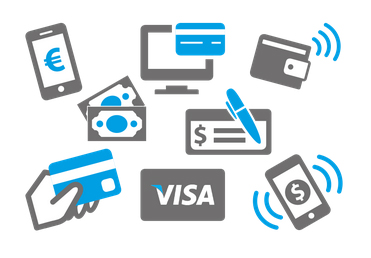
Multi-Channel-Payments

There are many costs associated with running a business. First you have to appoint great people and this is the most important expense to run the company. Then there are premises and of course marketing and so forth and so forth. With each of these cost elements, one would not consider the cost of getting paid. Depending on how this is calculated (and if you allocate staff directly associated with payments, as well as capital cost incurred in order to accept payments) it can contribute a lot to cost. In addition there is an indirect cost associated with lost revenue because of payment failures (fraud related or system related).

Doing a bit of calculation on the back of a cigarette box, this expense is at least 5% of cost, but probably less then 10%. That means that for every twenty beers sold, at least one is sold just to cover the cost of getting paid. That is a huge number!

Furthermore, it could be argued that utilizing payment features, retailers can improve the loyalty of customers. It does not take long to identify case studies: Making sure that customers drink more of their coffee at Starbucks through innovation with the mobile payment app, or ensuring that customers buy more at Target utilizing features associated with Target’s Red Card. Even if it is just highlighting savings at your grocer on the till slip, all of these loyalty features are clearly possible because of how payment infrastructure is being utilized.

It stands to reason therefore that for a modern retailer to be successful, payment skills and insights should form part of the make-up of the executive team.

Old and new payment types

credit card payment

Today, if you are in the United States, chances are that if you purchase something in a store (or even online), that you would use a credit or debit card. If you don’t, then you will likely pay in cash. In a store those payment options account for around 98% of transactions today and traditional browser based online transaction for about 95%. In non-traditional purchase channels (using mobile, in-app purchases and wallets) this number drops to just under 70%. Granted these type of purchases still only constitute about 3% of purchases in the US economy, but will probably grow to 7-10% of purchases in 2020.

Which made me think; how will new payment options stack up against old payment types in the future, and how should we think about it.

In my mind, there are six categories of payments that will feature in the future. Three of them very much traditional (old payment types) and three that one could classify as new types of payments. Each of these categories will behave differently and the jury is out on how they will grow or decline in usage.

The first of the traditional two categories are (of course) cash payments where a central banking authority sponsored, physical tokens are exchanged in order to conclude a payment. It is highly likely that this type of payment would decrease consistently. The second of the traditional category is checks – a strange phenomena in the US. Checks will steadily decline as payment tool. The decline can be accelerated significantly if banks were to change the pricing strategies to reflect cost and risk properly.

The first two of the new categories would be payments utilizing inter-bank clearing house mechanisms (here I would categorize any national ACH or Immediate payment switch). The reason that there are two categories here is that I think it is important to make a distinction between push and pull payments. Payments where the clearing is initiated by the payer, I would call push payments and when the payment is initiated by the payee, I would think of this as pull payments. If a new payment type were to disrupt the status quo significantly, my money would be on a push payment scheme based on any of the ACH’s available. This type of payment has already grown to more than 30% of bill payments and it is poised to grow more (also in purchase transactions).

The last category would be based payments based on some modern distributed ledger – read block-chain. How do they say in politics: it is too early to call ?

Whatever will happen, the payment landscape is sure to change.

Bots doing payments

what-are-bots

I am fascinated by the implications of driver-less cars in terms of what it will do to liabilities. In a world where vehicles are all driven by cars, there would never (technically) be any driving under the influence offenses ever again; and when there is an accident, who will be liable for the damages? – the manufacturer of the car, the developer of the software that runs the car? What will happen with insurance companies when there is no liability to ensure against anymore? It is all interesting discussions and very thought-provoking.

Lately, there has been a lot of work done to create bots that will perform financial transactions – especially buying and selling investment instruments (read here) or acquiring scarce tickets (Read here). It strikes me that we may then have the same challenges here. Who will be responsible for fraud or identity theft? If payments are made by robots (and payments are accepted by robots), how will we be able to allocate liabilities? The bots will of course be acting on behalf of some legal entity, but can this entity be held liable for a bot’s action when something untoward is done?

There are also other interesting ideas that one should discuss:

  • Could a Bot open a bank account and what would the status be regarding KYC?
  • How would you be able to verify a Bot’s “identity” when the Bot claims that its identity has been stolen? Would it even be possible to steal a Bot’s identity? Would a Bot have an identity and if it does not have one, how would it be able to interact with digital financial systems?
  • Would the channels to access financial systems be changed to accommodate bots? Today when we get stuck we phone the support center; what alternative channel would bots use?
  • Do we even want bots to be in our payment eco-system?
  • Can we stop them…?

It is likely that more payments will get automated in future, it is likely that Artificial Intelligence will be harnessed to do payments on our behalf, it is likely that devices (connected to the Internet) will perform payments on our behalf. We will need to embrace these changes, but we will also have to solve the challenges.

The benefits of Cash Sweeping

cash-sweep-complexity-1

In a previous post, I discussed the complexity of the current settlement systems and how a process of cash-sweeping could simplify this complexity significantly. Cash sweeping is a scenario where cash is transferred from one bank to another totally independent of the actual process of payments. One could look at this as decoupling settlement from the actual payment process itself.

There are many direct benefits to such an approach. I touch on some of these benefits below:

It will be a cheaper payment system

The cost of performing a payment is directly influenced by two factors: the number of tasks that are required to complete the payment and the risk associated with the payment. In bot these instances, a system based on cash sweeping would be much less costly. In the first instance, cash sweeping would require much fewer tasks to complete. Because the money never leaves the balance sheet of the bank, the bank will have control over and insight in a transaction for much longer. This reduces the risk associated with such a transaction.

It will strengthen the balance sheet of banks

In traditional payment schema based on a four party model and thus settlement, value immediately moves out of deposits on the balance sheet of the bank when the transaction is authorized. The bank immediately creates a settlement position – a kind of a holding account. In a three party model, money effectively moves from one bank account to another – both as deposits on the balance sheet of the bank. Because the money stays in deposits, the bank’s balance sheet is strengthened and the bank immediately has a higher capital adequacy.

It will improve the liquidity of retailers

In the case of traditional payment systems, retailers can only get access to their money after it has settled. This may be rather quickly in some instances, but in others, they could wait as long as a week for the money to arrive in their bank account. By implementing a settlement approach based on sweeping, there would be no reason that the retailer could not have access to their money a second after completion of the payment.

It will streamline dispute management

In traditional payment schema, dispute management are a complex affair where the actions of multiple entities (the issuer, the acquirer, the card association etc.) must be meticulously coordinated. Without this coordination, it would never be possible to resolve a dispute accurately. In a cash sweeping world, the number of entities involved are reduced significantly. It would make it possible to resolve disputes in real-time, which would be highly unlikely in the old system.

In my mind, there is very little reason why not to implement a system of cash sweeping rather than the existing complex system of settlements, except that it will be very costly to rip out the old system and replace it with a new one.


Cash sweeping rather than settlement

broom-sweeping-money-cash-into-dust-pan

Through history and the way that card payments have been designed, the action of clearing a payment and settling the payment became inextricably intertwined: one could just not clear a payment without also settling it. It was the only way to implement a multi-party payment model with limited resources in days gone by. When a customer from a different bank to the one that the merchant banks at pays, the merchant needs to know that that specific payment will ultimately end up in the right bank account.

The process of moving money from one bank to another, effectively for every payment made, is called settlement and through the decades it evolved to become one of the most complex systems in the payment world. It also contributes significantly to the cost of a payment. In order to be able to verify that every payment has been settled (individually), a complex structure of processes, reconciliation and managing exceptions was developed and is now in operation.

But what if we can decouple the settlement of a payment from the payment itself?

In this scenario, the money that a merchant makes from payments, will accumulate at the bank of the customer that purchased goods at the merchant. After a while, the merchant may have quite a tidy sum at another bank (or probably other banks), that represents the sum of all the payments received from clients from that bank. If it is a high volume business, the amount could be made up of thousands or even hundreds of thousands of transaction that were conducted in a short time.

If the merchant had the right tools, this money could then be transferred to the bank of choice of the merchant. The intervals of transferring the money, the logic and the amounts can be adjusted to support the needs of the merchant and can be totally decoupled from the actual payments. This would be called sweeping cash from one bank to another and would eliminate the need for settlement completely.

In a next post, I will discuss the merits of such a system and why it would make sense to consider deploying something like this.

Elementary Mr Watson

adventures-of-sherlock-holmes-1939

It is interesting how technology-activity and -investment is influenced by hype. If enough people are talking about something (especially when some announce that this phenomena is the biggest invention in human history since the invention of the wheel: read block-chain), then it must surely be important. Life in technology is the ebb and flow between one hype cycle to another.

A recent announcement, that I think is an indication of the start of a new hype cycle, is the announcement of IBM pay (read more here). Sure, everyone in technology should have a “pay”, there is Android pay and Apple pay, there is Walmart pay and Chase pay; so why not also have a IBM pay? This cannot be anything special.

Enter Watson:

By combining the private label offering with the proven ability of Watson, IBM could be onto something big: something that might just have the ability to start a new hype cycle. The possibilities and implications of using Artificial Intelligence (AI) in the payment process is endless. There are so many things that could be done to influence consumer behavior, reduce the cost of transactions, increase volume and more, by using AI to direct payments.

The IBM announcement would have been not that interesting, if it was done on its own: just another “pay” in a sea of “pays”. But implying an integration with one of the most mature AI engines in the world is absolutely significant.


Millennials and digital payments

millennials-stock

I am clearly not an expert about millennials. I don’t know what it must be like to have grown up in a world where e-Mails and Social media were not something that you “discovered” when you were thirty – it were things that were always there. I don’t know what it is like to have digital photographs documenting all of your life. Yet, what I do know is that these people will occupy the planet when I am gone… and they will use the systems to pay that we are conceiving now.

It is kind-of important to figure out what they do and how they interact with payment systems today. That is why I enjoyed looking at the results of a recent study performed by Vocalink (Read it here).

The first thing that shocked me was that 87% of the sample surveyed deposited a check in the last three months, but then I noticed that the study was based on US millennials only, and it is true that no human being can actually operate without checks in the US… currently.

But then, when I got over the shock, I found the following statistics quite interesting:

  • Millenials use cards to pay for food and drink (and not cash)
  • They sell stuff online
  • They are comfortable using their mobile phone to make payments and
  • they often send payments to other countries or make some kind of cross-currency payment.

It is important that we do not use our frame of reference when we think about what payment systems should look like when we envisage the future. What was good then, is not what would be good for the future. The payment systems of the future will have to run on devices, cater for an on-line lifestyle and provide for real-time payment experiences (even if a Dollar payment gets converted in to Euros).


The need for debate

credit_card_swipe.ju.top

When you have been doing something well for a long time and when you have worked on your mistakes and shortcomings. When you have built unique and useful functionality and improved every feature to the point where it is on the fringe of perfect… the it is hard to look critical at yourself.

The payment industry have created an amazing system that forms the bedrock of everything that we do as a human race. It is inconceivable to consider a world without reliable payments. Everything that we own, every experience and even when we get punished culminates in a payment. Fortunately, the human race has evolved to a stage where payments are done extremely well. Trillions of payments are performed annually and by far the majority of them are concluded faultlessly – at least in the eye of most beholders.

If we were to be honest with ourselves – in a world with almost unlimited processing power and bandwidth – payments are actually in dire need of reform. While everything may look well to the uninformed, everything is wrong with payments. Because of old payment rails (designed for a time where we were severely constrained by computing resources), our payment systems are prone to errors and unreliability. It is extremely difficult to integrate seamlessly to payment systems and it is unlikely that any expert would describe payment systems as flexible and adaptable. With new requirements – in part based on the growth of mobile phones, it has become important to talk about a future payment dispensation, unconstrained by the limitations of the past.

It would only be able to do this if we are bold enough to question every aspect of the status quo and create new, modern thoughts.